
Conference Session Tracks
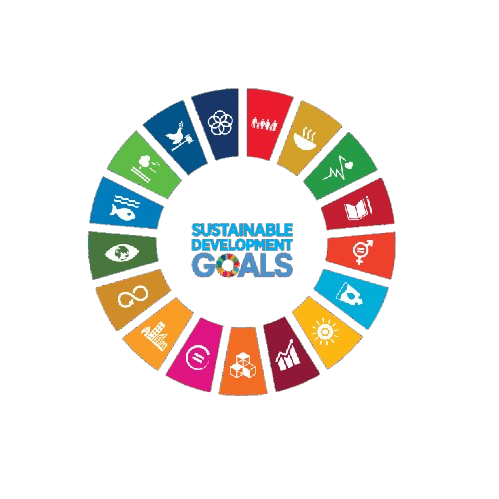
Aligned with
UN Sustainable Development Goals
This conference contributes to global sustainability by aligning its research discussions and academic sessions with key United Nations Sustainable Development Goals. It fosters knowledge exchange, innovation, and collaborative engagement.

SDG 3
Good Health and Well-being

SDG 4
Quality Education

SDG 6
Clean Water and Sanitation

SDG 9
Industry, Innovation and Infrastructure

SDG 11
Sustainable Cities and Communities

SDG 12
Responsible Consumption and Production

SDG 13
Climate Action

SDG 16
Peace, Justice and Strong Institutions
Track 01
Innovations in Exposure Assessment Methodologies
This track focuses on the latest advancements in methodologies for assessing human exposure to environmental contaminants. It aims to explore innovative techniques and technologies that enhance the accuracy and reliability of exposure assessments.
Track 02
Biomonitoring Techniques for Environmental Contaminants
This session will delve into various biomonitoring techniques used to evaluate human exposure to environmental pollutants. Participants will discuss the implications of biomonitoring data for public health and regulatory policies.
Track 03
Modeling Human Exposure: Challenges and Solutions
This track addresses the complexities of human exposure modeling, including the integration of various exposure pathways. It seeks to identify challenges and propose solutions for improving model accuracy and applicability.
Track 04
Emerging Contaminants: Risks and Assessment
This session will explore the risks associated with emerging contaminants and the methodologies for assessing their impact on human health. Discussions will include case studies and recent research findings.
Track 05
Consumer Exposure: Patterns and Implications
This track examines consumer exposure to environmental contaminants through various products and food sources. It aims to highlight the implications of exposure patterns for consumer safety and regulatory frameworks.
Track 06
Intermittent and Peak Exposure Scenarios
This session focuses on the assessment and implications of peak, transient, or intermittent exposures to environmental contaminants. Researchers will present findings on the health effects associated with these exposure scenarios.
Track 07
Environmental Contaminants in Air, Water, and Soil
This track investigates the sources and impacts of environmental contaminants in air, water, and soil. It aims to foster discussions on mitigation strategies and remediation technologies.
Track 08
Bioinformatics Approaches in Exposure Science
This session highlights the role of bioinformatics in understanding human exposure to environmental contaminants. Participants will discuss data integration and analysis techniques that enhance exposure assessment.
Track 09
Sources and Determinants of Environmental Exposure
This track explores the various sources and determinants that influence human exposure to environmental contaminants. It aims to identify key factors that contribute to exposure variability.
Track 10
Methodological Advances in Exposure Measurements
This session focuses on recent methodological advances in measuring and estimating human exposure to environmental hazards. Researchers will share innovative techniques that improve measurement accuracy.
Track 11
Regulatory Frameworks and Public Health Implications
This track discusses the intersection of regulatory frameworks and public health implications related to human exposure to environmental contaminants. It aims to foster dialogue on policy development and implementation.
Quick Links
Invited Speakers
Call for Papers
Instructions for Participants
Paper Submission
Register Now
Apply for Committee
Tentative Program
Awards & Recognition
Invitation Letter
Download Brochure
Journal consideration and publication are subject to editorial review, peer review and applicable journal policies.