Conference Session Tracks
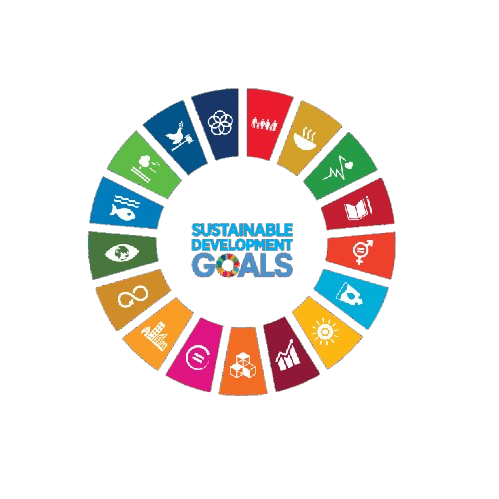
Aligned with
UN Sustainable Development Goals
This conference contributes to global sustainability by aligning its research discussions and academic sessions with key United Nations Sustainable Development Goals. It fosters knowledge exchange, innovation, and collaborative engagement.

SDG 7
Affordable and Clean Energy

SDG 9
Industry, Innovation and Infrastructure

SDG 11
Sustainable Cities and Communities

SDG 12
Responsible Consumption and Production

SDG 13
Climate Action

SDG 15
Life on Land

SDG 16
Peace, Justice and Strong Institutions
Track 01
Innovative Approaches to Biowaste Processing
This track focuses on novel methodologies and technologies for the efficient processing of biowaste. Participants will explore advancements in bioconversion techniques and their implications for resource recovery.
Track 02
Anaerobic Digestion: Mechanisms and Applications
This session delves into the biochemical processes underpinning anaerobic digestion and its practical applications in waste management. Emphasis will be placed on optimizing digestion processes for enhanced energy production.
Track 03
Resource Recovery in Circular Economy Frameworks
This track examines strategies for maximizing resource recovery within circular economy models. Discussions will highlight case studies and best practices that demonstrate successful integration of waste management and resource recovery.
Track 04
Energy Production from Organic Waste
This session addresses the potential of organic waste as a renewable energy source through various conversion technologies. Participants will evaluate the efficiency and sustainability of different energy production methods.
Track 05
Policy Frameworks for Sustainable Waste Management
This track explores the role of policy in shaping effective waste management practices. It will cover regulatory compliance, incentives for innovation, and the impact of policy on sustainability metrics.
Track 06
Environmental Monitoring and Lifecycle Assessment
This session focuses on the importance of environmental monitoring and lifecycle assessment in waste management practices. Participants will discuss methodologies for evaluating the environmental impacts of biowaste processing and anaerobic digestion.
Track 07
Waste Minimization Strategies and Best Practices
This track highlights effective strategies for minimizing waste generation across various sectors. Emphasis will be placed on innovative practices that contribute to sustainability and resource efficiency.
Track 08
Sustainability Metrics in Waste Management
This session investigates the development and application of sustainability metrics in assessing waste management practices. Participants will share insights on measuring the effectiveness of biowaste processing and anaerobic digestion.
Track 09
Smart Technologies in Waste Management
This track explores the integration of smart technologies in waste management systems. Discussions will focus on the role of digital innovations in enhancing operational efficiency and monitoring capabilities.
Track 10
Cleaner Production Techniques for Organic Waste
This session examines cleaner production techniques aimed at reducing the environmental footprint of organic waste management. Participants will discuss innovative practices that promote sustainability in production processes.
Track 11
Composting and Its Role in Resource Recovery
This track focuses on composting as a viable method for resource recovery from organic waste. Participants will explore best practices, challenges, and the environmental benefits of composting in waste management.